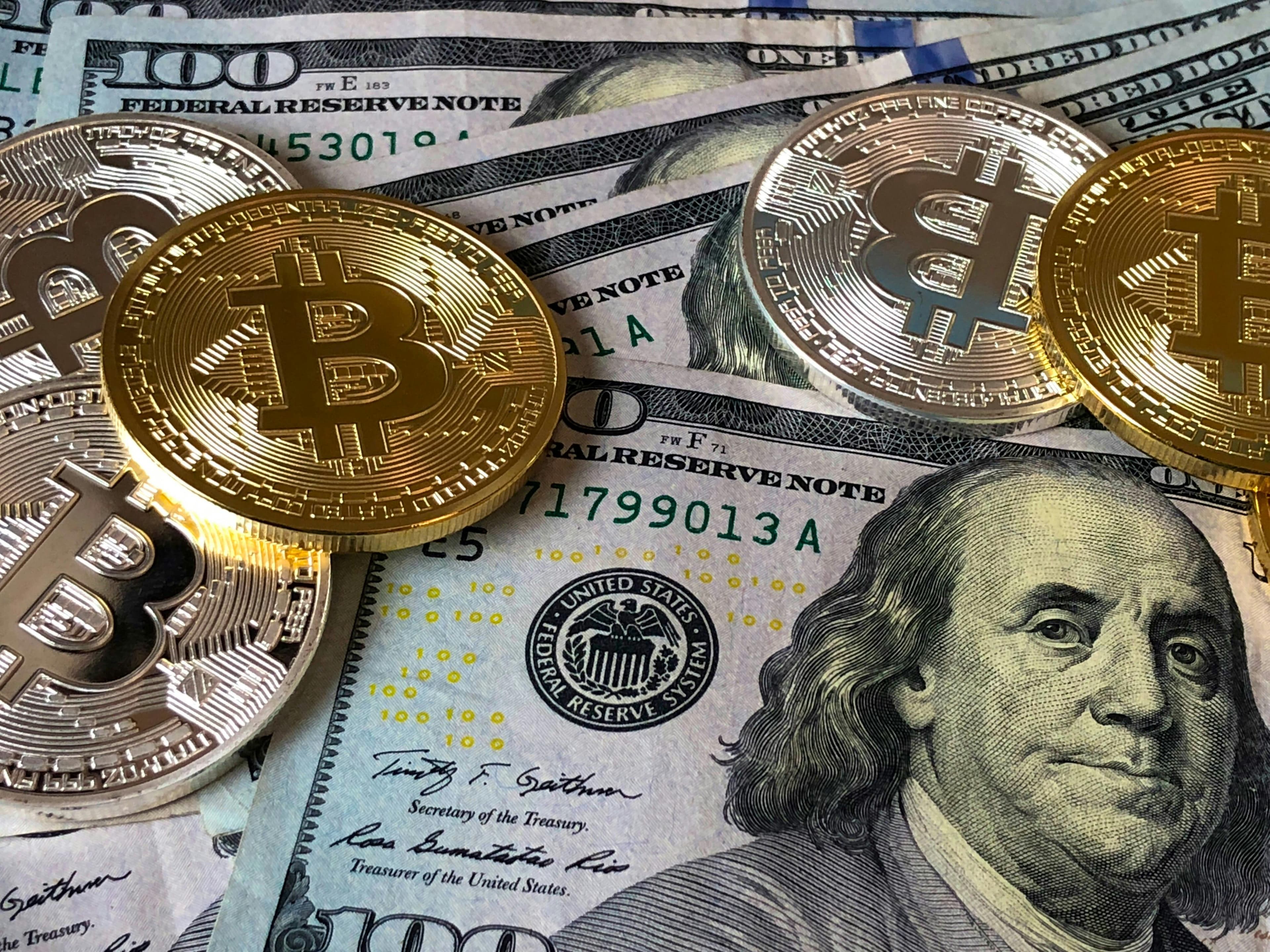
Is Bitcoin Too Expensive to Buy Now?
Bitcoin at $60,000+ seems expensive, but is it? Learn why price per coin doesn't matter, how to value Bitcoin properly, and when to buy regardless of absolute price levels.
Every time Bitcoin reaches a new price milestone—whether $20,000, $50,000, or $100,000—the same question emerges: "Is Bitcoin too expensive to buy now?" This concern is natural. When you see an asset trading at $60,000+ per coin, it's tempting to assume you've "missed the boat" and that buying now means purchasing at the top. But this intuition, while understandable, is based on a fundamental misunderstanding of what makes an asset "expensive" or "cheap."
The truth is that Bitcoin's price per coin is largely irrelevant to whether it's expensive. What matters is its value relative to its future potential, not its absolute dollar price. This comprehensive guide will help you understand how to evaluate whether Bitcoin is expensive at any price level, what metrics actually matter, and how to think about entry timing regardless of whether Bitcoin trades at $30,000, $60,000, or $100,000 per coin.
Understanding "Expensive" vs. "Overvalued"
High Price ≠ Expensive
A $100,000 Bitcoin could be cheap if it's heading to $1,000,000. A $10,000 Bitcoin could be expensive if it's heading to $5,000.
What matters: Value relative to future potential, not absolute price
Divisibility Matters
You don't need to buy whole Bitcoins. You can buy $100, $500, or any amount. 0.001 BTC is a valid investment.
Remember: 1 Bitcoin = 100,000,000 satoshis (smallest unit)
Key Insight: The question isn't "Is the price high?" but "Is Bitcoin overvalued relative to its adoption curve, network effects, and future utility?"
Why Price Per Coin Doesn't Determine If Bitcoin Is Expensive
The single biggest misconception about Bitcoin (and all investments) is confusing absolute price with valuation. Let's break down why Bitcoin at $60,000 isn't inherently "expensive" and why Bitcoin at $10,000 wasn't necessarily "cheap."
The Psychology of Big Numbers
Human psychology struggles with large numbers. When Bitcoin traded at $100 in 2013, it "felt" affordable. When it trades at $60,000, it "feels" expensive. But these feelings are misleading:
- Bitcoin at $100 in 2013: If you believed Bitcoin would never exceed $1,000, it was wildly expensive—you'd lose 90% when it crashed to $200. But if you understood it could reach $60,000+, it was incredibly cheap.
- Bitcoin at $60,000 today: If Bitcoin never exceeds $100,000, buying at $60,000 means limited upside. But if Bitcoin reaches $500,000 or $1,000,000 over the next decade, $60,000 is very cheap—an 8-16x return.
The absolute price is irrelevant. What matters is the ratio of current price to future value. That ratio determines whether something is expensive or cheap.
Comparison: Berkshire Hathaway Class A Stock
Consider Berkshire Hathaway (BRK.A), Warren Buffett's company. One share trades at approximately $600,000—ten times higher than Bitcoin's price per coin. Does that mean Berkshire is "too expensive to buy"? Of course not. The price per share is irrelevant; what matters is whether the company is undervalued or overvalued relative to its intrinsic worth.
Similarly, Bitcoin's price per coin tells you nothing about whether it's expensive. You must evaluate it relative to:
- Its potential future value (adoption scenarios)
- Its current market capitalization relative to comparable assets
- Its position in the adoption curve
- Network metrics and fundamental strength
Divisibility: You Don't Need to Buy Whole Bitcoins
A critical fact that many newcomers miss: you can buy tiny fractions of Bitcoin. You don't need $60,000 to invest in Bitcoin. You can buy:
- $100 worth = approximately 0.0017 BTC (at $60,000/BTC)
- $500 worth = approximately 0.0083 BTC
- $1,000 worth = approximately 0.017 BTC
- $5,000 worth = approximately 0.083 BTC
Bitcoin is divisible to eight decimal places—the smallest unit is called a "satoshi" (0.00000001 BTC). This divisibility means Bitcoin's price per coin is merely a display convention. Whether Bitcoin trades at $60,000 or $600,000, you can still invest $100 or $10,000 and own a proportional amount.
Saying "Bitcoin is too expensive at $60,000" is like saying "Amazon stock is too expensive at $180" without considering whether you believe Amazon will grow. The price per unit doesn't determine if an investment is expensive—the valuation does.
What Actually Determines If Bitcoin Is Expensive?
If price per coin doesn't determine whether Bitcoin is expensive, what does? Here are the frameworks and metrics that actually matter for valuation.
1. Market Capitalization vs. Total Addressable Market
Market capitalization (total value of all Bitcoin) provides meaningful context that price per coin doesn't:
- Bitcoin's market cap: At $60,000 per BTC with ~19.6M BTC in circulation, market cap is approximately $1.18 trillion
- Gold's market cap: Approximately $13-15 trillion (above-ground gold)
- Global money supply (M2): Approximately $100+ trillion
- Global wealth: Approximately $450+ trillion
From this perspective, Bitcoin at $1.18 trillion market cap represents:
- ~8-9% of gold's market cap
- ~1% of global money supply
- ~0.26% of global wealth
Valuation Question: If you believe Bitcoin will eventually capture 10-20% of gold's market cap (as "digital gold"), then $60,000 Bitcoin is cheap—it has 10-20x upside. If you believe Bitcoin will capture 5% of global wealth storage, it has 20x upside. But if you believe Bitcoin has peaked and won't grow beyond $1-2 trillion market cap, then $60,000 might be expensive.
The key insight: Bitcoin's "expensiveness" depends on your view of its total addressable market, not its current price per coin.
2. Adoption Curve Position
Bitcoin's current adoption level provides context for whether it's early or late in its growth cycle:
- Global Bitcoin owners: Estimated 100-300 million people (depending on measurement method)
- Global population: 8 billion people
- Bitcoin adoption rate: ~2-4% of global population
For context, internet adoption curves show that technologies reaching 2-4% adoption often have 10-20 years of growth remaining before reaching majority adoption. If Bitcoin follows similar trajectories, it's in the early adopter phase, not late adoption.
From this lens, Bitcoin at any current price represents early investment in a technology that's only reached a fraction of its potential user base. Even at $60,000+, you're earlier than most people who will eventually own Bitcoin.
3. Network Strength and Fundamentals
Unlike stocks (which have earnings, revenue, profit margins), Bitcoin's value comes from network effects and utility as money. Key fundamental metrics include:
- Hash rate: The computational power securing the network. Higher hash rate = more secure = more valuable. Bitcoin's hash rate has grown exponentially, even through price volatility, indicating strong fundamental support.
- Active addresses: The number of unique addresses transacting daily. Growing active addresses indicate growing usage and adoption.
- Transaction volume: The dollar value of transactions processed. Higher volume indicates greater utility and economic activity.
- HODLer behavior: The percentage of Bitcoin held long-term (1+ years) vs. actively traded. High HODL rates indicate strong conviction and reduced selling pressure.
- Lightning Network growth: The growth of Bitcoin's layer-2 scaling solution indicates expanding payment utility beyond simple value storage.
When these fundamentals are strong and growing, Bitcoin can justify higher prices. When they weaken, Bitcoin may be overvalued regardless of price. Currently, most Bitcoin fundamentals show long-term strength, suggesting the network isn't overextended even at elevated prices.
4. Cyclical Position: Bull Market or Bear Market?
Bitcoin exhibits pronounced four-year cycles, largely driven by its halving events (when mining rewards are cut in half every ~4 years, reducing new supply). Understanding where you are in the cycle provides crucial context:
Typical Bitcoin Cycle Pattern:
- Year 1 (Post-Halving): Recovery from previous bear market, accumulation phase
- Year 2: Bull market acceleration, new all-time highs
- Year 3: Peak euphoria, blow-off top, crash begins
- Year 4: Bear market bottom, despair, pre-halving accumulation
Valuation Implications:
- During bear markets (Year 4): Bitcoin often trades 70-80% below previous peak. This is historically the "cheap" entry point, though it feels psychologically difficult when sentiment is negative.
- During early bull markets (Year 1-2): Bitcoin is recovering but still has significant upside potential. These are favorable risk-reward entry points.
- During late bull markets (Year 2-3): Bitcoin is likely approaching local tops. This is when it "feels" safest to buy but often represents the most dangerous timing. Not necessarily "expensive" in absolute terms, but risk-reward is less favorable.
Understanding cycles doesn't mean you can perfectly time tops and bottoms, but it provides context for whether current prices represent attractive entry points or elevated risk levels.
Why This Matters: Practical Investment Implications
Understanding that Bitcoin's price per coin doesn't determine whether it's expensive has direct implications for how you should think about buying Bitcoin:
- Stop Waiting for Arbitrary Price Levels: Many people tell themselves "I'll buy Bitcoin when it drops to $30,000" or "I'll wait for a crash." This arbitrary price targeting is backwards. If Bitcoin is fundamentally undervalued at $60,000 (because you believe it's heading to $500,000), then waiting for $30,000 might mean you never buy— and miss out on a 8x gain. Conversely, if Bitcoin is overvalued at $30,000 (because adoption is stalling), buying at that "cheaper" price still means losing money.
- Focus on Value, Not Price: Instead of asking "Is $60,000 per Bitcoin too much?", ask "Is Bitcoin's current $1.2 trillion market cap undervalued relative to its potential to store global wealth, facilitate payments, and serve as digital property?" If yes, then even $60,000 (or $100,000) is cheap. If no, then even $10,000 is expensive.
- Dollar-Cost Average to Remove Timing Pressure: Since you can't reliably predict whether $60,000 Bitcoin is "cheap" or "expensive" in real-time, the optimal strategy is often to dollar-cost average—buy fixed dollar amounts regularly ($500/month, $200/week, etc.) over 6-24 months. This approach ensures you build a position across various price points, removing the need to perfectly time your entry.
- Think in Percentages, Not Dollars: A $100 investment in Bitcoin at $60,000 buys you the same percentage upside as a $100 investment at $30,000. If Bitcoin doubles, you make $100 either way. The price per coin is irrelevant to your percentage returns—only the percentage move matters. This means Bitcoin at any price offers the same proportionalopportunity; what matters is whether it will appreciate from current levels.
- Use SpotMarketCap for Context, Not Permission: Real-time price data from SpotMarketCap helps you understand current Bitcoin prices, but don't let the absolute number ($60,000, $80,000, $100,000) intimidate you. Use price information to calculate how much Bitcoin your investment buys, not to determine whether the price is "too high." That determination comes from fundamental analysis, not price level.
In practice, the investors who succeeded with Bitcoin didn't wait for perfect prices—they accumulated positions when they understood the value proposition, regardless of whether Bitcoin was at $1,000, $10,000, or $30,000. Those who waited for "cheaper" prices often waited forever and missed substantial gains.
When Bitcoin Actually IS Too Expensive: Warning Signs
While price per coin doesn't determine if Bitcoin is expensive, there ARE legitimate indicators that suggest Bitcoin might be overvalued and due for correction. Watch for these warning signs:
1. Euphoric Sentiment and Mainstream Mania
When your barber, Uber driver, and grandmother are all talking about buying Bitcoin and asking for investment advice, sentiment has likely reached unsustainable levels. Historical tops occur when:
- Mainstream media coverage becomes relentlessly positive and sensational
- Social media is dominated by "get rich quick" Bitcoin discussions
- New investors with zero cryptocurrency knowledge are aggressively buying
- Leverage (borrowed money) in Bitcoin markets reaches extreme levels
- Alternative cryptocurrencies with no fundamental value surge on pure speculation
These conditions indicate excessive speculation and typically precede corrections, regardless of absolute price level.
2. Extreme Deviation from Long-Term Trend
Bitcoin's price tends to follow a long-term logarithmic growth trend with periodic deviations. When price extends far above the long-term trend (often measured by 200-week moving average or stock-to-flow models), corrections typically follow to bring price back toward trend.
- Historically safe zones: Bitcoin trading near or below 200-week moving average
- Moderately extended: Bitcoin 2-3x above 200-week MA (normal bull market)
- Danger zone: Bitcoin 5-10x above 200-week MA (indicates unsustainable speculation)
These technical indicators aren't perfect, but they provide context for whether current prices are sustainable or represent temporary speculation-driven bubbles.
3. Weakening Fundamentals
If Bitcoin's price is rising but fundamental metrics are declining, that's a warning sign:
- Active addresses declining while price rises (fewer users despite higher price)
- Transaction volume stagnant or falling (reduced economic utility)
- Hash rate declining (reduced security and miner confidence)
- Developer activity slowing (reduced innovation and improvement)
- Long-term holders distributing aggressively (smart money selling to newcomers)
Strong fundamentals can justify high prices; weak fundamentals during price rallies suggest unsustainable speculation.
4. Regulatory or Existential Threats
If credible existential threats emerge—government bans in major economies, critical technical vulnerabilities, superior competing cryptocurrencies—Bitcoin may be overvalued regardless of price. These fundamental challenges would undermine the long-term thesis and justify lower valuations.
Currently, most regulatory developments have moved toward legitimization and integration (Bitcoin ETFs, institutional adoption, clearer legal frameworks) rather than prohibition, suggesting this risk has diminished over time.
Historical Perspective: Bitcoin's Price History and Lessons
Looking at Bitcoin's history provides valuable perspective on what "expensive" means in context:
Key Price Milestones
- 2011: Bitcoin reaches $30, then crashes to $2 (-93%)
- 2013: Bitcoin reaches $1,200, then crashes to $200 (-83%)
- 2017: Bitcoin reaches $20,000, then crashes to $3,200 (-84%)
- 2021: Bitcoin reaches $69,000, then crashes to $16,000 (-77%)
Lessons from History
1. Every Previous "High" Looks Cheap in Retrospect
Bitcoin at $1,200 in 2013 seemed expensive—a 40x gain from the previous year. Many said "I missed it." Yet $1,200 was 97% below the eventual $69,000 peak. Even the $20,000 peak in 2017 was 71% below the 2021 high. Historical "expensive" prices proved to be attractive entry points over multi-year horizons.
2. Corrections Are Severe But Temporary
Bitcoin has experienced four 80%+ crashes. Each time, it seemed like "the end" for Bitcoin. Each time, critics declared victory. Each time, Bitcoin eventually recovered and exceeded previous highs. Buying during these crashes (when Bitcoin seemed "dead") proved optimal, but psychologically difficult. Even buying at previous highs and holding through crashes resulted in profits over 4+ year horizons.
3. Waiting for Perfect Prices Usually Means Missing Out
Many investors in 2017 said "I'll buy when Bitcoin drops to $5,000." It did—briefly touching $3,200 in late 2018. But by the time sentiment was negative enough for Bitcoin to reach those levels, most people were too scared to buy. They waited for $1,000, which never came. By the time they felt comfortable buying again, Bitcoin was back at $30,000+. Perfect timing is nearly impossible; systematic accumulation beats waiting.
What This Means for Current Prices
History doesn't guarantee Bitcoin will continue this pattern—past performance never does. But it provides context: what seems "expensive" today often looks cheap in hindsight if the long-term thesis plays out. Conversely, what seems "cheap" after crashes requires courage to buy when sentiment is negative.
The takeaway isn't "Bitcoin always goes up" (it doesn't, as 80% crashes demonstrate). The takeaway is that price per coin has never been a reliable indicator of whether Bitcoin is expensive—fundamental adoption, network effects, and position in cycle matter far more.
Practical Strategies for Buying Bitcoin at Any Price
1. Dollar-Cost Averaging (DCA)
The most effective strategy for most investors is to invest fixed amounts regularly regardless of price:
- Decide on a total amount you want to invest (e.g., $6,000)
- Divide by number of purchases (e.g., 12 months = $500/month)
- Buy the same dollar amount monthly regardless of Bitcoin's price
- This averages your entry price across market conditions
Advantage: Removes timing pressure and emotional decision-making. You buy more Bitcoin when prices are low, less when prices are high, creating a natural averaging effect.
2. Value-Based Buying (Buy the Dip)
For more active investors, set predetermined buy points based on valuation metrics rather than arbitrary prices:
- Buy when Bitcoin falls 20% from recent highs
- Buy when Bitcoin approaches or falls below 200-week moving average
- Buy when sentiment reaches extremely negative levels (Fear & Greed Index below 20)
- Buy when fundamentals are strong but price is declining
Advantage: Captures better prices by buying during fear rather than greed.
Disadvantage: Requires patience and discipline. You might wait months or years for your target levels, missing gains if Bitcoin doesn't correct to your targets.
3. Hybrid Approach
Combine strategies: use DCA for 70% of your target allocation, reserve 30% for opportunistic buying during significant corrections:
- Invest $350/month systematically via DCA
- Keep $150/month in reserve
- Deploy reserves during 20%+ corrections or bear markets
Advantage: Ensures you're always building a position while maintaining flexibility to capitalize on fear-driven price drops.
Related Topics on SpotMarketCap
Conclusion: Price Is What You Pay, Value Is What You Get
Warren Buffett famously said, "Price is what you pay, value is what you get." This wisdom applies perfectly to Bitcoin. The question "Is Bitcoin too expensive to buy now?" focuses on price—the wrong question. The right question is: "Is Bitcoin's current valuation justified by its fundamental adoption, network effects, and future potential?"
Bitcoin at $60,000 isn't inherently expensive or cheap. It depends entirely on where Bitcoin is heading. If Bitcoin becomes a global reserve asset storing 10-20% of the world's wealth, then $60,000 represents early adoption pricing—incredibly cheap. If Bitcoin has peaked in adoption and won't exceed current levels, then $60,000 might be expensive.
What we know from history:
- Every previous "high" price proved cheap in hindsight for patient holders
- Timing perfect entries is nearly impossible; systematic accumulation works better
- Price per coin is irrelevant—you can invest any dollar amount you choose
- Fundamentals and adoption matter far more than absolute price level
- The best time to buy Bitcoin was yesterday; the second-best time is today (if you believe in the thesis)
Rather than trying to time perfect prices, focus on:
- Understanding the fundamental value proposition: Does Bitcoin solve real problems?
- Assessing your conviction: Do you believe in long-term adoption?
- Sizing appropriately: Invest only what you can hold through 50%+ volatility
- Building systematically: Use dollar-cost averaging to remove timing pressure
- Thinking long-term: Bitcoin's value proposition plays out over years, not days
Use SpotMarketCap to track Bitcoin's current price, but don't let the number intimidate you. Whether Bitcoin trades at $40,000, $60,000, or $100,000, you can still invest $100, $500, or $5,000 and participate proportionally in Bitcoin's future. The question isn't whether the price feels high—it's whether you believe Bitcoin's value will continue growing over your investment horizon.
If you believe in Bitcoin's long-term trajectory, then almost any price represents an opportunity. If you don't believe in that trajectory, then no price is cheap enough. That's the fundamental truth: it's never about the price—it's always about the value.
Disclaimer: This article is for educational and informational purposes only. We are not financial advisors, and nothing in this content should be construed as financial advice or a recommendation to buy or sell Bitcoin at any price. Cryptocurrency investing involves substantial risk, including the potential for total loss of principal. Bitcoin is highly volatile—prices can and do fall 50-80% during bear markets. Past performance does not guarantee future results. The examples and scenarios in this article are illustrative only and do not represent predictions or guarantees. Always consult with a qualified financial advisor who understands your complete financial situation before making investment decisions. Use SpotMarketCap's price data and educational content as research tools, not as investment recommendations.
Track Real-Time Asset Prices
Get instant access to live cryptocurrency, stock, ETF, and commodity prices. All assets in one powerful dashboard.
Related Articles
Is Now a Good Time to Buy Bitcoin? Market Analysis 2025
Bitcoin down 25% from highs: Is now the time to buy? Analyze halving cycles, institutional behavior, and sentiment indicators for informed Bitcoin investment decisions.
How Much Bitcoin Should I Own?
Determine your optimal Bitcoin allocation. Learn proven frameworks from 1% to 25%, risk management strategies, and how to size your position based on age, goals, and risk tolerance.
Should I Buy Gold Right Now? 2025 Investment Timing Guide
Gold at $4,000+: Should you buy now or wait? Expert analysis of market conditions, timing strategies, and dollar-cost averaging frameworks for 2025 gold investors.