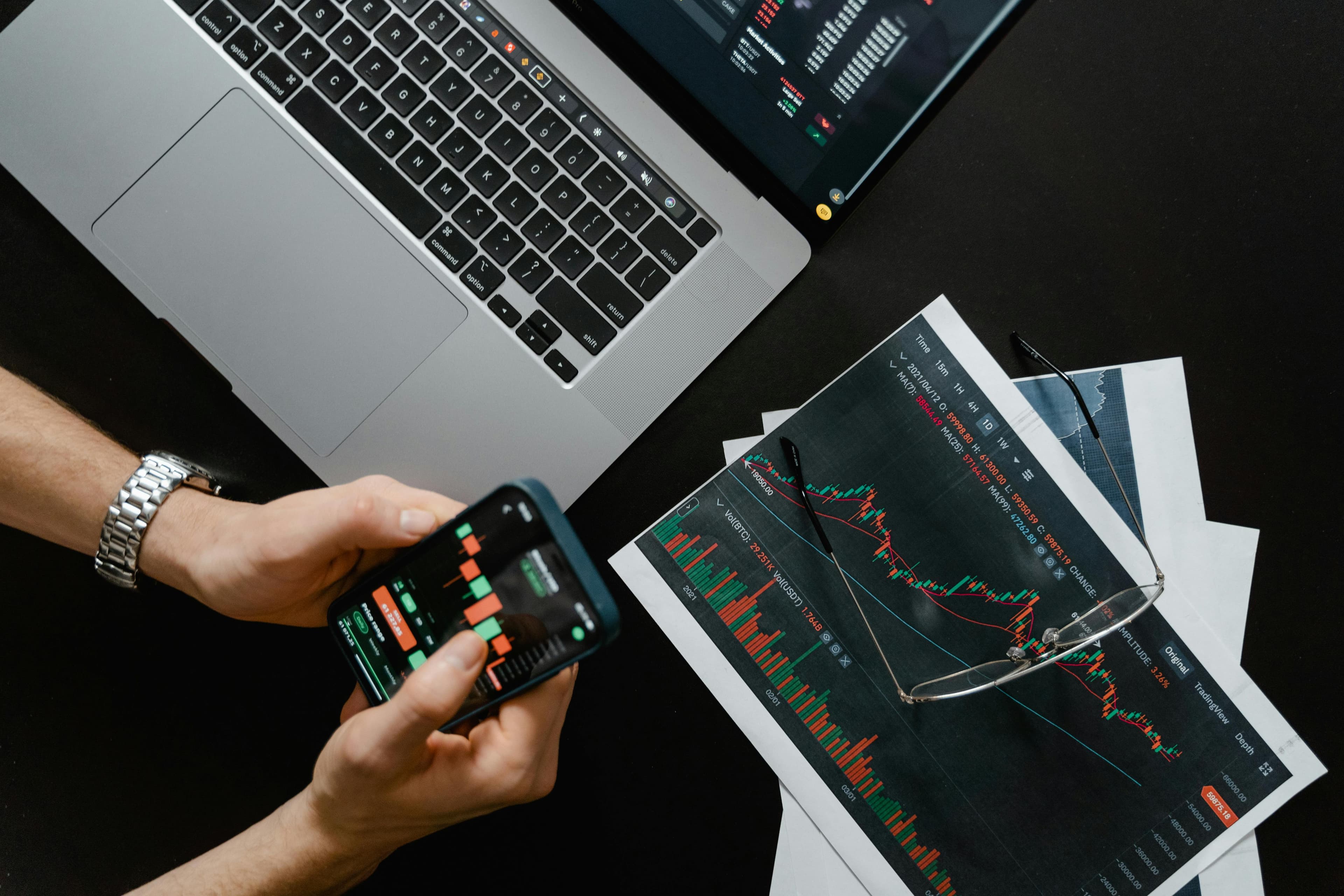
What is Day Trading? Short-Term Trading Explained
Master day trading—the high-intensity strategy of buying and selling within a single day. Learn techniques, risks, capital requirements, and whether day trading fits your goals.
In the fast-paced world of financial markets, few trading strategies capture the imagination quite like day trading. The idea of buying and selling securities within a single trading day, potentially earning profits from small price movements, attracts thousands of new traders every year. But day trading is far more than simply making quick trades—it's a demanding discipline that requires skill, strategy, emotional control, and significant time commitment.
Whether you're trading stocks, cryptocurrencies, forex, or futures, day trading operates on the same fundamental principle: capitalize on intraday price volatility while avoiding overnight risk. In this comprehensive guide, we'll explore everything you need to know about day trading: what it is, how it works, the strategies professionals use, the risks involved, and whether this high-intensity trading style is right for you.
Day Trading at a Glance
Time Horizon
Single Day Only
No overnight positions
Trading Frequency
5-100+ Trades/Day
High activity level
Example: Buy AAPL at 9:45 AM → Sell at 2:30 PM → Close before 4:00 PM market close
What is Day Trading?
Day trading is a short-term trading strategy where traders buy and sell financial instruments within the same trading day, closing all positions before the market closes. The core principle is simple: profit from small price movements by executing multiple trades throughout the day, while avoiding the risk of holding positions overnight when unexpected news or events could cause significant price gaps.
Unlike long-term investors who hold stocks for months or years waiting for appreciation, day traders aim to capture small profits repeatedly throughout the trading session. A successful day trader might make dozens or even hundreds of trades per day, with each trade targeting gains of just a few cents to a few dollars per share. These small gains compound when multiplied across multiple trades and often involve leveraged positions.
The Technical Definition
Day trading is characterized by several key features:
- Intraday Positions: All positions are opened and closed within a single trading session
- No Overnight Risk: Traders go home "flat" (with no open positions) every night, eliminating overnight gap risk
- High Frequency: Multiple trades executed throughout the day to capitalize on small price movements
- Technical Analysis Focus: Heavy reliance on charts, patterns, and technical indicators rather than fundamental analysis
- Leverage Usage: Often utilizes margin or leverage to amplify potential returns from small price movements
In the United States, the Financial Industry Regulatory Authority (FINRA) officially defines a "pattern day trader" as anyone who executes four or more day trades within five business days, provided the number of day trades is more than 6% of total trading activity. Pattern day traders are subject to specific regulations, including maintaining a minimum account balance of $25,000.
A Simple Example
Let's walk through a typical day trade:
- 9:45 AM: Trader spots momentum in Tesla (TSLA) stock at $245.50 per share
- 9:46 AM: Buys 200 shares for $49,100 total
- 10:15 AM: Price rises to $247.25, representing a $1.75 gain per share
- 10:16 AM: Sells all 200 shares for $49,450
- Result: $350 profit in 30 minutes (minus commissions and fees)
The trader closes the position the same day, locking in the profit while avoiding the risk of holding the stock overnight. This trader might execute 10-20 similar trades throughout the day, some profitable, some not, with the goal of ending the day with net positive gains.
How Day Trading Works: The Mechanics
Understanding the practical mechanics of day trading is essential before attempting this strategy. Day trading requires specific tools, knowledge, and market conditions to execute successfully.
Market Hours and Timing
Day traders focus on regular market hours when liquidity is highest and price movements are most predictable. For U.S. stock markets, this means:
- Pre-Market: 4:00 AM - 9:30 AM ET (extended hours trading available on some platforms)
- Regular Market Hours: 9:30 AM - 4:00 PM ET (primary day trading window)
- After-Hours: 4:00 PM - 8:00 PM ET (limited participation)
Most day trading activity concentrates around the market open (9:30-11:00 AM) and market close (3:00-4:00 PM), when volatility and volume are typically highest. The midday period (11:30 AM - 2:00 PM) often sees reduced volume and tighter ranges, making it less attractive for day trading.
Essential Trading Tools
Professional day trading requires sophisticated tools and technology:
Trading Platform: Advanced trading software with real-time data, Level 2 quotes (showing order book depth), fast execution, and advanced charting capabilities. Popular platforms include Interactive Brokers, TD Ameritrade's Thinkorswim, TradeStation, and E*TRADE Pro.
Fast Internet Connection: Reliable, high-speed internet is non-negotiable. Delays of even seconds can mean the difference between profit and loss when trading volatile securities.
Multiple Monitors: Most serious day traders use 2-6 monitors to track multiple charts, watchlists, news feeds, and order entry screens simultaneously.
Real-Time Data Feeds: Access to real-time market data, news, and analytics. Free or delayed data is insufficient for day trading where split-second decisions matter.
Scanners and Screeners: Software that identifies trading opportunities based on predefined criteria like unusual volume, price breakouts, or volatility spikes.
Capital Requirements
Day trading in the U.S. equity markets has specific capital requirements:
- Minimum Equity: Pattern day traders must maintain at least $25,000 in their margin account at all times
- Buying Power: With a margin account, day traders receive 4:1 intraday buying power, meaning $25,000 allows up to $100,000 in day trading buying power
- Risk Capital: Only trade with money you can afford to lose completely, as day trading carries substantial risk
These requirements are lower for forex and cryptocurrency day trading, which can begin with smaller accounts, though similar risk management principles apply.
Popular Day Trading Strategies
Successful day traders employ specific strategies designed to identify and capitalize on short-term price movements. Here are the most common approaches:
1. Momentum Trading
Momentum trading involves identifying stocks or assets experiencing strong directional movement and riding that momentum for quick profits. Momentum traders look for securities "in play"—those experiencing higher-than-normal volume and volatility due to news, earnings, or market events.
How It Works:
- Scan for stocks with unusual volume and strong price movement
- Enter positions in the direction of the momentum
- Set tight stop losses to limit downside
- Exit when momentum shows signs of exhaustion
Example: A biotech stock announces positive FDA trial results before market open. The stock gaps up 20% at the open and continues climbing on heavy volume. Momentum traders jump in during the initial move, riding the wave for 30-60 minutes before exiting as buying pressure diminishes.
2. Scalping
Scalping is the most aggressive day trading style, focusing on tiny price movements and executing dozens to hundreds of trades daily. Scalpers aim to profit from the bid-ask spread and small price fluctuations, often holding positions for just seconds to minutes.
Characteristics:
- Very short holding periods (seconds to minutes)
- High trade frequency (50-200+ trades per day)
- Targets tiny profits (1-10 cents per share)
- Requires intense focus and fast execution
- Extremely sensitive to transaction costs
Scalping requires the lowest possible commission costs, fastest execution speeds, and exceptional discipline. It's one of the most demanding trading styles but can be profitable for experienced traders with the right setup.
3. Breakout Trading
Breakout traders identify key price levels (support, resistance, consolidation patterns) and enter positions when price breaks through these levels with conviction. The theory is that breakouts from established ranges often lead to significant directional moves.
Common Breakout Setups:
- Opening Range Breakout: Trade the break of high/low from the first 15-30 minutes of trading
- Chart Pattern Breakouts: Triangles, flags, rectangles breaking out with volume confirmation
- VWAP Breakouts: Price breaking above/below the Volume Weighted Average Price line
4. Reversal Trading
Reversal traders attempt to identify exhaustion points where a trend is about to reverse direction. This contrarian approach looks for overextended moves and enters counter-trend positions anticipating a pullback or reversal.
Signals Traders Look For:
- Divergences between price and momentum indicators (RSI, MACD)
- Exhaustion gaps and climactic volume
- Candlestick reversal patterns at key levels
- Oversold/overbought readings on technical indicators
Reversal trading is higher risk because you're fighting the prevailing trend, but can offer excellent risk-reward ratios when executed correctly at major turning points.
5. News-Based Trading
News traders capitalize on volatility created by earnings announcements, economic data releases, FDA approvals, mergers and acquisitions, and other significant news events. The strategy requires quick reaction to breaking news and understanding how different types of news typically affect prices.
Key Events Traders Monitor:
- Earnings reports (especially surprises)
- Economic data (GDP, employment, inflation)
- Federal Reserve announcements
- Company-specific news (product launches, lawsuits, executive changes)
- Sector-specific developments (regulatory changes, commodity prices)
Why Understanding Day Trading Matters for Your Trading Success
Day trading isn't just a fast-paced way to make money—understanding this strategy reveals crucial insights about market dynamics, even if you never day trade yourself. Here's why mastering day trading concepts matters:
- Market Structure Knowledge: Day trading teaches you how markets really work—order flow, bid-ask spreads, market makers, and liquidity. This knowledge improves your execution quality regardless of your trading timeframe.
- Discipline and Risk Management: Day traders must master strict risk management or face rapid account depletion. These lessons about position sizing, stop losses, and emotional control apply to all trading styles.
- Technical Analysis Mastery: Day trading forces you to become proficient at reading charts, identifying patterns, and interpreting indicators—skills that enhance any trading or investing approach.
- Understanding Volatility: Day traders live and breathe volatility. Understanding how and why prices move intraday helps you time entries and exits better, even for longer-term positions.
- Avoiding Day Trader Traps: Knowing how day traders operate helps you avoid common pitfalls like panic selling during intraday volatility or chasing momentum moves that reverse quickly.
Even if you're a long-term investor, recognizing day trading patterns helps you understand intraday price action and avoid making emotional decisions based on short-term noise. When you see your stock drop 2% in the first hour of trading, knowing this might just be day traders taking profits prevents you from making hasty decisions that harm your long-term strategy.
The Risks and Challenges of Day Trading
Day trading appears attractive—quick profits, no overnight risk, excitement, and independence. However, the reality is that day trading is one of the most challenging and risky trading approaches. Understanding these risks is crucial before committing capital.
High Failure Rate
Multiple academic studies and broker data reveal a sobering truth: the vast majority of day traders lose money. Research suggests that approximately 95% of day traders fail within their first year, and only about 1% consistently profit over the long term.
This high failure rate isn't due to lack of effort—it reflects the inherent difficulty of consistently outperforming the market over short timeframes while overcoming transaction costs, slippage, and the competition from professional traders and algorithms.
Transaction Costs Erode Profits
While commission-free trading has become common, day traders still face significant costs:
- Bid-Ask Spread: The difference between buy and sell prices can consume small gains, especially on less liquid securities
- Slippage: Getting filled at worse prices than expected during volatile or fast-moving markets
- Platform Fees: Real-time data, advanced platforms, and professional tools cost money
- SEC Fees: Small fees on all sales that add up with high trade frequency
A day trader making 50 trades per day might pay the equivalent of 0.10% round-trip cost per trade when accounting for all factors. That's a 5% daily hurdle that must be overcome just to break even—an enormously difficult challenge.
Emotional and Psychological Stress
Day trading is psychologically demanding. The constant decision-making, rapid wins and losses, and pressure to perform create significant stress. Common psychological challenges include:
- FOMO (Fear of Missing Out): Jumping into trades impulsively to avoid missing potential profits
- Revenge Trading: Making irrational trades to recover from losses quickly
- Overconfidence: A string of wins can lead to excessive risk-taking
- Analysis Paralysis: Overthinking setups and missing good opportunities
- Burnout: The intense focus required leads many traders to burnout within months
Capital Risk
Day trading can lead to rapid capital loss, especially when using leverage. A few bad trading sessions can wipe out weeks or months of gains. The use of 4:1 leverage amplifies both gains and losses, meaning a 2% adverse move on a fully leveraged position results in an 8% account loss.
Time Commitment
Successful day trading requires treating it as a full-time job. You need to:
- Be available during market hours (impossible if you work a regular job)
- Spend hours preparing before the market opens
- Review trades and journal performance after market close
- Continuously educate yourself on new strategies and market conditions
- Maintain physical and mental health under constant stress
Real-World Examples of Day Trading Scenarios
Let's examine real-world day trading scenarios to illustrate both the opportunities and pitfalls of this strategy.
Example 1: Successful Momentum Trade on Earnings
Scenario: A trader monitors pre-market action and notices that Company XYZ reported earnings that beat expectations significantly. The stock is gapping up 12% on heavy volume.
Execution:
- 9:35 AM: Stock opens at $48.50, up from $43 previous close
- 9:40 AM: After initial volatility, stock pulls back to $47.80
- Trader buys 500 shares at $47.85 as momentum resumes
- 10:15 AM: Stock reaches $50.20 as buying continues
- Trader sells at $50.00, securing $1,075 profit (minus costs)
Result: Clean momentum trade capitalizing on positive fundamental news and strong technical follow-through. Risk was managed with a stop loss at $47.20, limiting downside to about $325.
Example 2: Failed Breakout Trade
Scenario: Trader identifies a stock consolidating in a tight range for the first hour of trading, forming a bull flag pattern suggesting upside breakout.
Execution:
- 10:45 AM: Stock breaks above $35.50 resistance on increased volume
- Trader buys 300 shares at $35.60
- 10:50 AM: Stock reaches $35.85 briefly
- 10:55 AM: Breakout fails, stock reverses sharply back below $35.50
- 11:00 AM: Stop loss triggered at $35.20, resulting in $120 loss
Result: False breakout that trapped buyers. However, proper risk management limited the loss to a predetermined amount, preventing larger damage. This illustrates why discipline matters more than any individual trade outcome.
Example 3: Scalping Strategy Throughout the Day
Scenario: Experienced scalper focuses on high-volume, liquid stocks with tight spreads, executing numerous trades throughout the session.
Sample Day Results:
- 62 total trades executed
- 38 winning trades (average gain: $45 per trade = $1,710)
- 24 losing trades (average loss: $32 per trade = $768)
- Gross profit: $942
- Costs (estimated): $180 in spreads and fees
- Net profit: $762 for the day
Analysis: This represents a successful scalping day with 61% win rate. However, it required intense focus for 6+ hours, numerous split-second decisions, and generated what amounts to roughly $125/hour before taxes—decent but not extraordinary considering the stress and skill required.
Common Misconceptions About Day Trading
Day trading is surrounded by myths and misconceptions, often perpetuated by advertising and social media. Let's address the most common ones.
Misconception 1: "Day Trading is Easy Money"
Reality: Day trading is one of the most difficult ways to make money in financial markets. The high failure rate, intense competition, and substantial skill requirement make it far from easy. Most beginners lose money quickly, and those who succeed typically spend years developing expertise.
Misconception 2: "You Can Get Rich Quick Day Trading"
Reality: While exceptional traders exist who generate substantial returns, they're exceedingly rare. Most successful day traders earn modest returns relative to the time and stress invested. The "get rich quick" promise is generally marketing hype, not realistic expectation.
Misconception 3: "You Don't Need Much Capital to Start"
Reality: While technically you can start with less than the $25,000 pattern day trader requirement by trading in a cash account or trading forex/crypto, having adequate capital is crucial. Undercapitalized traders face enormous pressure to make profits quickly, leading to excessive risk-taking and likely failure. Most experts recommend starting with $50,000+ to trade comfortably.
Misconception 4: "Day Trading Eliminates Overnight Risk, So It's Safer"
Reality: While day trading does eliminate overnight gap risk, it introduces other risks: higher transaction costs, more frequent decision points where mistakes can occur, greater exposure to intraday volatility, and the psychological stress of constant trading. Overall, day trading isn't inherently safer than other approaches.
Misconception 5: "Technical Analysis Alone is Sufficient"
Reality: While day traders rely heavily on technical analysis, successful traders also understand fundamentals, market structure, order flow, and broader market context. Ignoring the fundamental reasons behind price movements often leads to getting caught on the wrong side of major moves.
Essential Skills for Day Trading Success
If you're serious about pursuing day trading, developing these essential skills significantly improves your odds of success:
Technical Proficiency
- Master chart reading and pattern recognition
- Understand key indicators (VWAP, moving averages, RSI, MACD)
- Identify support and resistance levels accurately
- Recognize volume patterns and their significance
- Navigate trading platforms efficiently
Risk Management
- Calculate proper position sizes based on account size and risk tolerance
- Set and honor stop losses without exception
- Never risk more than 1-2% of account on any single trade
- Understand reward-to-risk ratios and only take favorable setups
- Know when to stop trading for the day after losses
Psychological Control
- Manage emotions during wins and losses
- Avoid revenge trading after losses
- Maintain discipline to follow your trading plan
- Accept that losses are part of trading
- Stay patient waiting for quality setups
Continuous Learning
- Keep detailed trading journals to analyze performance
- Review both winning and losing trades to identify patterns
- Stay updated on market news and economic events
- Adapt strategies as market conditions change
- Learn from experienced traders (but verify claims)
Key Takeaways
Let's summarize the essential points about day trading:
- Day trading involves buying and selling securities within the same trading day, closing all positions before market close to eliminate overnight risk
- Pattern day traders in the U.S. must maintain $25,000 minimum equityand gain access to 4:1 intraday buying power
- Common strategies include momentum trading, scalping, breakout trading, and news-based trading, each with different risk profiles and requirements
- Success requires sophisticated tools: advanced platforms, real-time data, fast internet, and typically multiple monitors
- The failure rate is extremely high, with approximately 95% of day traders losing money, especially in the first year
- Transaction costs are significant when executing dozens to hundreds of trades daily, creating a substantial hurdle to profitability
- Day trading requires full-time commitment and intense focus during market hours, making it incompatible with regular employment
- Psychological control and discipline are as important as technical skills, if not more so for long-term success
- Risk management is non-negotiable: position sizing, stop losses, and daily loss limits protect your capital
- Understanding day trading improves your overall market knowledge even if you never day trade, helping you navigate intraday volatility and avoid common traps
Related Topics on SpotMarketCap
Conclusion
Day trading represents one of the most challenging yet fascinating approaches to financial markets. The allure of quick profits, independence, and excitement attracts thousands of aspiring traders every year. However, the reality is far more demanding than most expect. Day trading requires substantial capital, sophisticated tools, extensive knowledge, perfect discipline, and psychological fortitude that few possess.
The statistics are sobering: most day traders lose money, and those who succeed typically invest years developing their skills before achieving consistent profitability. The high transaction costs, intense competition from professionals and algorithms, and psychological pressure create enormous hurdles that only the most dedicated and talented traders overcome.
Does this mean you shouldn't day trade? Not necessarily. If you're genuinely passionate about markets, have adequate capital you can afford to lose, can commit full-time focus, and approach it as a serious business requiring continuous learning, day trading can be a viable path. However, you must enter with realistic expectations, comprehensive education, solid risk management, and acceptance that success is far from guaranteed.
For most people, longer-term trading or investing approaches offer better risk-adjusted returns with less stress and time commitment. Swing trading, position trading, or long-term investing can be more suitable for those who can't dedicate every trading day to the markets or prefer less psychological intensity.
Regardless of whether you choose to day trade, understanding how day traders operate improves your overall market comprehension. You'll better understand intraday volatility, recognize technical patterns, and avoid common mistakes like panic selling during normal intraday fluctuations. This knowledge makes you a better-informed market participant regardless of your preferred timeframe.
If you do decide to pursue day trading, start small, educate yourself thoroughly, paper trade extensively before risking real capital, and accept that losses are part of the learning process. Treat it as a business, not gambling, and never risk money you can't afford to lose. With the right approach, realistic expectations, and continuous dedication to improvement, you can navigate the challenging world of day trading more successfully.
Remember: Day trading success isn't about making money quickly—it's about developing skills, managing risk, controlling psychology, and executing your strategy with discipline over thousands of trades. There are no shortcuts, and the market always reveals the truth about your preparation and abilities.
Track Real-Time Asset Prices
Get instant access to live cryptocurrency, stock, ETF, and commodity prices. All assets in one powerful dashboard.
Related Articles

What is Swing Trading? Multi-Day Position Strategy
Learn swing trading—capturing multi-day price moves without the stress of day trading. Discover technical analysis, position sizing, and proven swing trading strategies.

What is Buy and Hold? Long-Term Investing Strategy
Understand buy-and-hold investing—the time-tested strategy that built generational wealth. Learn why patience beats timing, historical returns, and portfolio construction.
What is Dollar Cost Averaging? Regular Investment Strategy
Master dollar-cost averaging—the disciplined approach to investing fixed amounts regularly. Learn how DCA reduces risk, eliminates timing stress, and builds wealth systematically.