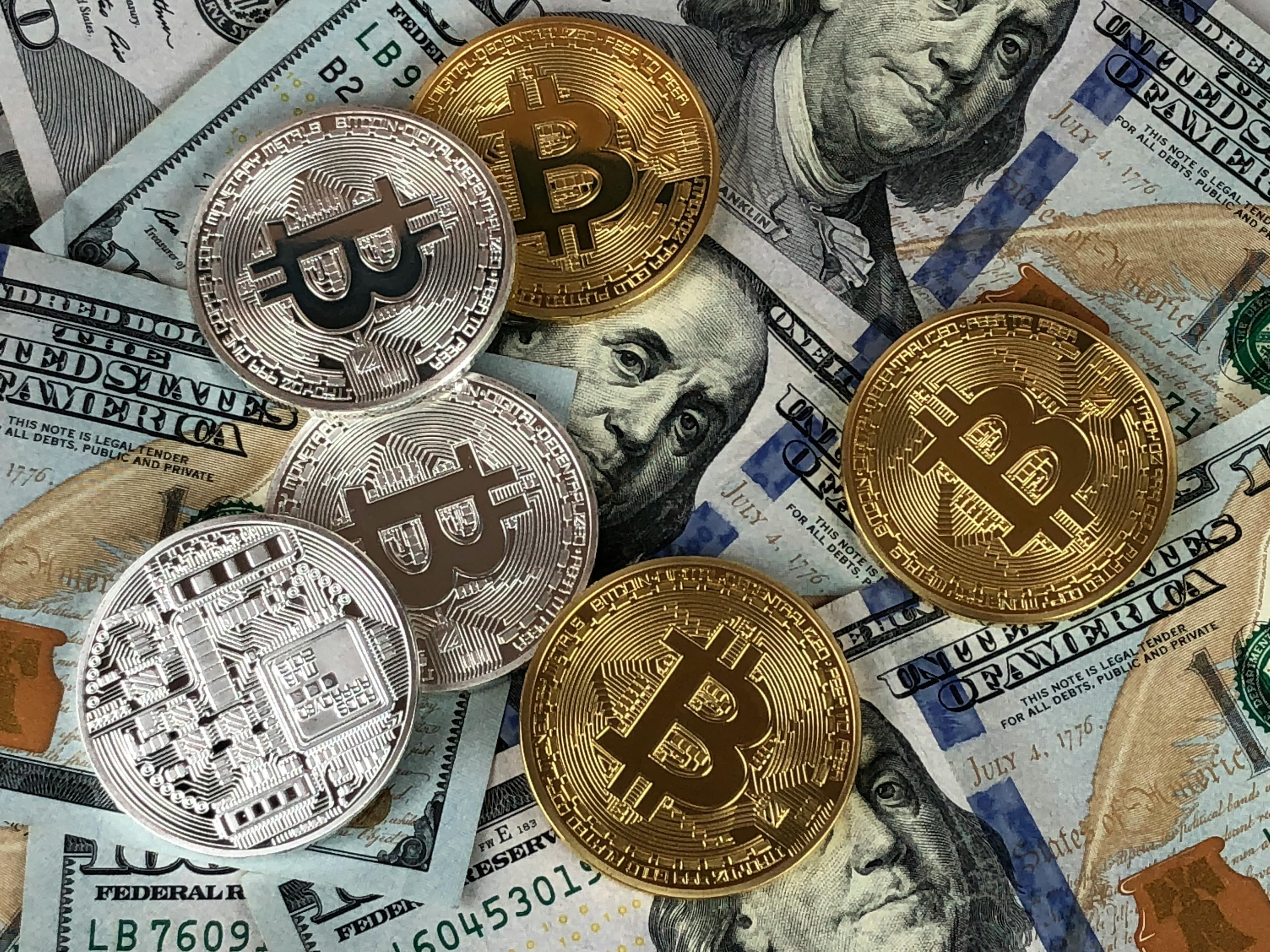
Gold vs Bitcoin: Which is a Better Store of Value in 2025?
Comprehensive comparison of gold and Bitcoin as stores of value in 2025. Analyze scarcity, volatility, track record, institutional adoption, and optimal allocation strategies for wealth preservation.
The debate between gold and Bitcoin as superior stores of value has intensified dramatically in 2025, with both assets reaching new adoption milestones while exhibiting fundamentally different characteristics. Gold, humanity's monetary metal for over 5,000 years with a current market capitalization exceeding $15 trillion, faces its first credible digital challenger in Bitcoin—a 16-year-old cryptocurrency with $1+ trillion market cap that's evolved from cypherpunk experiment to institutional asset class. As central banks accelerate monetary expansion, inflation concerns persist, and geopolitical tensions rise, investors increasingly ask: which asset better preserves wealth in 2025 and beyond?
This comprehensive analysis examines gold and Bitcoin through the rigorous lens of store-of-value properties—scarcity, durability, portability, divisibility, verifiability, fungibility, censorship resistance, and track record. We'll explore performance data, adoption trends, regulatory developments, and practical considerations to help you make informed allocation decisions. Whether you're a gold traditionalist skeptical of "magic internet money" or a Bitcoin maximalist dismissing gold as a "boomer rock," understanding both assets' strengths and weaknesses is critical for navigating 2025's monetary landscape.
Gold vs Bitcoin Quick Comparison (2025)
Gold Market Cap
~$15 Trillion
5,000+ year track record
Bitcoin Market Cap
~$1.2 Trillion
16 year track record
Volatility Comparison
BTC 3-4x Higher
Gold more stable
Defining "Store of Value": The Framework
Before comparing gold and Bitcoin, we must establish what makes an effective store of value. Economists and monetary theorists have identified several essential properties:
- Scarcity: Limited supply that cannot be easily expanded, preserving purchasing power over time
- Durability: Resistance to degradation, corrosion, or loss of properties over extended periods
- Portability: Ease of movement across space and borders without significant cost or difficulty
- Divisibility: Ability to break into smaller units without losing value proportionally
- Verifiability: Ease of authentication to prevent counterfeits or fraud
- Fungibility: Interchangeability where each unit is equivalent to another
- Censorship Resistance: Difficulty for authorities to confiscate or control
- Historical Track Record: Proven ability to maintain purchasing power through various regimes
No asset scores perfectly on all dimensions—trade-offs always exist. Gold and Bitcoin represent radically different approaches to the store-of-value problem, with each excelling in different areas.
Gold as Store of Value: Strengths and Weaknesses
Gold's Core Strengths
1. Unparalleled Historical Track Record
Gold has served as money and store of value for over 5,000 years across virtually every civilization. It has survived countless empires, wars, currency collapses, and technological revolutions. This Lindy Effect—the longer something has survived, the longer it's likely to survive—gives gold unique credibility. No other asset can claim this heritage.
2. Physical Reality and Universal Recognition
Gold's physicality provides tangible security. You can hold it, store it independently of any system, and it will exist regardless of internet, electricity, or institutional continuity. Globally, gold is universally recognized as valuable—from New York banks to rural Indian villages, gold commands respect and acceptance.
3. Central Bank Reserves and Institutional Demand
Central banks hold approximately 35,000 tonnes (~$2.5 trillion) of gold reserves in 2025, with net buying accelerating since 2022. China, Russia, Poland, and others have dramatically increased holdings. This institutional demand floor provides price support that few assets enjoy—sovereign nations accumulating an asset signals deep trust in its store-of-value properties.
4. No Counterparty Risk
Physical gold held in your possession has zero counterparty risk. It's not someone else's liability, doesn't depend on any company's solvency, and requires no third party to maintain value. In financial crises when counterparty risk soars, gold shines as the ultimate "no one's liability" asset.
5. Regulatory Clarity and Legal Status
Gold's legal status is settled globally. It's recognized as a legitimate asset class, faces clear tax treatment in most jurisdictions, and isn't subject to existential regulatory uncertainty. Governments may restrict gold ownership temporarily (as the US did 1933-1974), but its status as a store of value is not in question.
Gold's Weaknesses as Modern Store of Value
1. Inferior Portability and Storage Challenges
Gold's weight makes large-value storage and transportation costly and risky. Moving $1 million in gold (about 12 kg at $2,500/oz) across borders requires declaring it, paying shipping/insurance, and accepting seizure risks. For capital flight or wealth mobility, gold's physicality becomes a liability.
2. Verification Complexity and Counterfeiting
Authenticating gold requires specialized equipment, expertise, and often destructive testing. Sophisticated tungsten-core counterfeits exist that fool simple tests. This verification friction creates trust dependencies—most gold holders rely on refiners' stamps, dealer reputation, or custodian guarantees rather than independent verification.
3. Ongoing Annual Supply Inflation
Gold miners produce approximately 3,000-3,500 tonnes annually (~1.5-1.8% of above-ground stock). While low, this perpetual inflation means gold's scarcity is relative, not absolute. As mining technology improves or prices rise sufficiently, supply can increase—there's no hard cap.
4. Fungibility Concerns
Not all gold is equal. Conflict gold, Russian gold post-sanctions, or gold from sanctioned refineries faces liquidity discounts or outright rejection by certain buyers. Your gold's history and provenance can affect its marketability—perfect fungibility doesn't exist in practice.
5. Seizure and Confiscation History
Executive Order 6102 (1933 US gold confiscation), UK's 1966 restrictions, and other historical precedents show governments can and will restrict gold ownership during crises. Physical gold in home safes is vulnerable to physical theft, while vaulted gold creates custodial risks.
Bitcoin as Store of Value: Strengths and Weaknesses
Bitcoin's Core Strengths
1. Absolute Scarcity: 21 Million Hard Cap
Bitcoin's supply is mathematically capped at 21 million coins, with issuance schedule halving every 4 years via code enforced by tens of thousands of independent nodes. In 2025, ~19.6 million bitcoins exist, with issuance now under 1% annually (lower than gold) and declining toward zero by 2140. This represents the first absolutely scarce asset in human history—no matter the price, supply cannot increase beyond protocol rules.
2. Superior Portability and Borderless Nature
Bitcoin can be transported across borders instantly and costlessly by memorizing a 12-word seed phrase. You can carry $100 million in Bitcoin in your head, crossing any border without declaration, seizure risk (if properly secured), or physical burden. For capital mobility and wealth preservation across jurisdictions, Bitcoin is unparalleled.
3. Perfect Verifiability and No Counterfeits
Verifying Bitcoin ownership and authenticity is trivial with any internet-connected device. Cryptographic signatures make counterfeiting mathematically impossible. Unlike gold's complex assaying, any user can independently verify their Bitcoin's authenticity and the entire supply in real-time via running a node.
4. Perfect Divisibility and Programmability
Bitcoin divides into 100 million satoshis per coin, allowing microtransactions impossible with physical gold. Additionally, Bitcoin's programmability enables features like multisignature security, time-locks, and smart contract integration—flexibility that physical gold cannot match.
5. Censorship Resistance and Self-Custody
Properly secured Bitcoin (in self-custody with good operational security) is virtually impossible to confiscate without the owner's cooperation. Governments can't seize what they can't access, and Bitcoin's decentralized network operates beyond any single jurisdiction's control. This property is increasingly valuable as financial surveillance and capital controls expand globally.
6. Network Effects and Growing Adoption
Bitcoin's network effects strengthen over time. By 2025, institutional adoption includes spot ETFs managing $50+ billion in assets, corporations holding BTC on balance sheets, and nation-states (El Salvador, potentially others) accumulating reserves. Bitcoin is transitioning from speculative asset to established store of value.
Bitcoin's Weaknesses as Store of Value
1. Short Track Record and Uncertainty
Bitcoin has existed only 16 years—a blink compared to gold's millennia. It hasn't survived a major global war, extended depression, or technological paradigm shift that might render it obsolete. Critics reasonably argue that 16 years doesn't prove longevity, especially for a purely digital asset dependent on continued network participation.
2. Extreme Volatility
Bitcoin's volatility (50-80% annual swings are common) makes it challenging as a short-to-medium term store of value. While long-term holders have profited dramatically, anyone needing to access value within specific timeframes faces significant uncertainty. Gold's relative stability (typically 10-20% annual swings) better preserves value over 1-3 year periods.
3. Regulatory and Existential Risks
Bitcoin faces ongoing regulatory uncertainty. Governments could ban self-custody, impose draconian taxation, restrict fiat on/off ramps, or attempt network attacks. While Bitcoin is resilient, coordinated international action could significantly impair usability and value. This tail risk—though decreasing as adoption grows—doesn't exist for gold.
4. Technological Dependencies
Bitcoin requires electricity, internet connectivity, and functioning computing infrastructure. In scenarios of prolonged grid failures, internet censorship, or technological regression, Bitcoin becomes inaccessible while physical gold remains usable. This dependency creates scenarios where gold's physicality is advantageous.
5. Self-Custody Complexity and Loss Risks
Properly securing Bitcoin requires technical knowledge that many users lack. Poor operational security leads to hacks, theft, or permanent loss through seed phrase mismanagement. An estimated 3-4 million bitcoins (~15-20% of supply) are permanently lost. While custodial solutions exist, they reintroduce counterparty risk that defeats Bitcoin's core value proposition.
6. No Physical Backing or Intrinsic Use
Bitcoin has no physical manifestation and limited non-monetary use cases. Gold has industrial and jewelry demand creating price floors; Bitcoin's value is purely monetary/speculative. Critics argue this makes Bitcoin more vulnerable to narrative collapse, though proponents counter that pure monetary assets are actually superior (no value leakage to industrial consumption).
Performance Comparison: Historical Returns and Drawdowns
Long-Term Returns
Gold Performance (2000-2025):
- 2000-2025: ~+550% (from ~$280 to ~$2,500/oz)
- Annualized: ~7.8%
- Beat US inflation (2.5% average) by ~5.3% annually
- Largest bull run: 2000-2011 ($280 → $1,920, +585%)
- Largest bear market: 2011-2015 ($1,920 → $1,050, -45%)
Bitcoin Performance (2009-2025):
- 2009-2025: ~+millions of percent (from pennies to ~$65,000)
- 2015-2025: ~+15,000% ($250 → ~$65,000)
- Annualized (2015-2025): ~65% (!)
- Largest drawdowns: 2013-2015 (-80%), 2017-2018 (-84%), 2021-2022 (-77%)
- Recovery time: 1-3 years typically
Key Insight: Bitcoin has vastly outperformed gold over every multi-year period, but with dramatically higher volatility. Gold has never declined more than 45% from peak, while Bitcoin routinely suffers 70-85% drawdowns between bull markets.
Risk-Adjusted Returns
When adjusting for risk (Sharpe ratio, Sortino ratio), the picture becomes more nuanced:
- Bitcoin: Exceptional raw returns but poor risk-adjusted metrics due to volatility. Sharpe ratios typically 0.5-1.5 depending on timeframe
- Gold: Lower raw returns but superior risk-adjusted performance. Sharpe ratios typically 0.3-0.8, with better downside protection
For investors with long time horizons (10+ years) who can tolerate volatility, Bitcoin has been superior. For wealth preservation with lower volatility tolerance, gold has been more appropriate.
2025 Specific Considerations
Developments Favoring Bitcoin in 2025
- Spot ETF Maturation: US Bitcoin spot ETFs (approved 2024) have gathered $50+ billion, providing easy institutional and retail access while proving regulatory acceptance
- Halving Effects: April 2024 halving reduced new Bitcoin supply to ~450 BTC/day (~0.85% annual inflation), now below gold's inflation rate
- Corporate Adoption: More corporations adding BTC to treasury (MicroStrategy, others) validates Bitcoin as institutional reserve asset
- Lightning Network Scaling: Payment infrastructure improvements make Bitcoin increasingly functional as medium of exchange, enhancing store-of-value narrative
Developments Favoring Gold in 2025
- De-Dollarization Trends: BRICS nations and others reducing USD reserves in favor of gold, driving central bank demand to record levels
- Geopolitical Instability: Multiple conflicts and tensions favor gold's "crisis asset" status and 5,000-year track record
- Regulatory Clarity: Gold faces zero regulatory uncertainty while crypto regulation remains contentious and evolving
- Demographic Preferences: Older, wealthier demographics still overwhelmingly prefer gold; inter-generational wealth transfer will be gradual
Why This Matters for Your Portfolio
The gold vs. Bitcoin decision isn't academic—it has profound implications for wealth preservation and portfolio construction in 2025:
- Diversification Benefits: Gold and Bitcoin are largely uncorrelated to stocks and to each other, making both valuable portfolio diversifiers. Many sophisticated allocators hold both rather than choosing one exclusively.
- Time Horizon Matters: Longer time horizons favor Bitcoin (higher growth potential); shorter horizons favor gold (lower volatility). If you need to access funds within 3 years, gold is safer. If you're saving for 10+ years, Bitcoin's upside may justify volatility.
- Risk Tolerance Alignment: Conservative investors comfortable with 10-20% swings should favor gold. Aggressive investors who can stomach 50%+ drawdowns may benefit from Bitcoin's asymmetric upside.
- Scenario Planning: Gold outperforms in: slow institutional collapse, loss of confidence in fiat but preservation of physical world, older demographic preferences dominating. Bitcoin outperforms in: rapid monetary debasement, digital transformation acceleration, younger demographic preferences prevailing, capital control evasion needs.
- Allocation Size Matters: A 1-5% Bitcoin allocation provides meaningful upside exposure while limiting portfolio volatility. A 5-15% gold allocation provides crisis insurance and inflation protection without excessive opportunity cost.
Practical Allocation Frameworks
Conservative Approach (Traditional Portfolios)
- 5-10% gold allocation (physical or highly secure ETFs)
- 0-2% Bitcoin allocation (spot ETF or secure self-custody)
- Rationale: Gold provides tested crisis hedge; small Bitcoin exposure captures upside if adoption continues
Moderate Approach (Balanced)
- 5-10% gold allocation
- 2-5% Bitcoin allocation
- Rationale: Meaningful exposure to both monetary metals, diversified across physical and digital scarcity
Aggressive Approach (Growth-Oriented)
- 3-5% gold allocation
- 5-15% Bitcoin allocation
- Rationale: Overweight Bitcoin for higher growth potential while maintaining gold as volatility buffer
Anti-Fragile Approach (Maximum Optionality)
- 10-15% combined precious metals allocation (gold, silver)
- 10-15% combined crypto allocation (Bitcoin, perhaps Ethereum)
- Rationale: Prepared for either physical or digital monetary future; maximum diversification across monetary regime possibilities
Common Misconceptions
Misconception 1: "Bitcoin Will Replace Gold"
Reality: More likely both coexist serving complementary roles. Gold's established institutional infrastructure, 5,000-year heritage, and physical properties ensure ongoing demand. Bitcoin may capture market share but total replacement is improbable within our lifetimes.
Misconception 2: "Gold Has No Growth Potential"
Reality: Gold rallied +585% from 2000-2011, outperforming stocks during that period. In scenarios of major fiat currency crisis, gold's upside remains substantial. Gold's "boring" reputation stems from 2011-2019 consolidation, not inherent limitations.
Misconception 3: "Bitcoin Is Too Volatile to Be Store of Value"
Reality: Store of value operates across different timeframes. Over 4+ year periods, Bitcoin has always been profitable for holders despite volatility. Volatility is declining as market cap grows and adoption matures. Early assets are always volatile—gold was likely volatile in its first decades of adoption thousands of years ago.
Misconception 4: "You Must Choose One or the Other"
Reality: Portfolio theory suggests holding both provides superior risk-adjusted returns due to diversification benefits. Gold and Bitcoin have low correlation, making them complementary rather than competitive portfolio holdings for many investors.
Key Takeaways
- Gold offers unmatched track record (5,000 years), regulatory clarity, lower volatility, and universal recognition—ideal for conservative wealth preservation
- Bitcoin offers absolute scarcity (21M hard cap), superior portability, perfect verifiability, and censorship resistance—ideal for long-term asymmetric upside
- Bitcoin has dramatically outperformed gold over every multi-year period (2009-2025) but with 3-4x higher volatility
- Gold excels in shorter timeframes (1-3 years) and for investors requiring stability; Bitcoin excels over longer periods (5+ years) for growth-oriented investors
- 2025 dynamics favor both: Bitcoin via ETF adoption and halving dynamics; gold via central bank buying and de-dollarization
- Most sophisticated investors hold both, allocating based on time horizon, risk tolerance, and scenario planning rather than ideological commitment to one
- Allocation frameworks range from conservative (5-10% gold, 0-2% BTC) to aggressive (3-5% gold, 5-15% BTC) to anti-fragile (10-15% each)
- Gold's advantages: stability, track record, no technology dependency, regulatory certainty, physical tangibility
- Bitcoin's advantages: absolute scarcity, portability, verifiability, censorship resistance, growth potential
- The real question isn't "which is better" but rather "what allocation of each fits my situation, time horizon, and risk tolerance"
Related Topics on SpotMarketCap
Conclusion
The gold versus Bitcoin debate represents one of the most fascinating monetary questions of our era—a contest between humanity's oldest monetary technology and its newest. Gold brings 5,000 years of proven wealth preservation, institutional acceptance, and physical tangibility that appeals to conservative investors and central banks alike. Bitcoin brings mathematical scarcity, digital portability, and censorship resistance that appeals to those preparing for increasingly digital, surveilled, and controlled monetary systems.
Rather than viewing these assets as competitors, sophisticated investors increasingly recognize them as complementary—different tools for different scenarios. Gold provides stability, crisis insurance, and continuity with monetary history. Bitcoin provides asymmetric upside, digital-age advantages, and optionality on continued fiat debasement and technological transformation.
In 2025 specifically, both assets face favorable tailwinds. Bitcoin benefits from spot ETF adoption, halving supply dynamics, and younger demographic preferences. Gold benefits from record central bank buying, geopolitical instability, and de-dollarization trends. An investor holding both is prepared for multiple monetary futures rather than betting exclusively on one path.
Your optimal allocation depends on personal factors: time horizon (shorter favors gold, longer favors Bitcoin), risk tolerance (conservative favors gold, aggressive favors Bitcoin), technological comfort (digital natives gravitate to Bitcoin, traditionalists to gold), and philosophical views on money's future. There's no universal "right answer"—only the right answer for your specific situation.
The most important decision isn't choosing between gold and Bitcoin—it's recognizing that in an era of unprecedented monetary experimentation, holding some form of scarce, non-fiat store of value is increasingly prudent. Whether physical or digital, ancient or modern, protecting wealth from debasement is timeless wisdom.
Track Real-Time Asset Prices
Get instant access to live cryptocurrency, stock, ETF, and commodity prices. All assets in one powerful dashboard.
Related Articles
Bitcoin vs Gold vs Real Estate: Which Is the Best Store of Value?
Compare Bitcoin, gold, and real estate as stores of value. Analyze returns, volatility, liquidity, and inflation hedge properties to build the ultimate wealth preservation strategy.
Should I Buy Bitcoin or Gold? Complete 2025 Comparison
Bitcoin or gold? Compare these inflation hedges head-to-head. Discover which asset suits your portfolio based on risk tolerance, time horizon, and investment goals.
What is Bitcoin vs Gold Comparison? Digital vs Physical Store of Value
Compare Bitcoin and gold as stores of value—digital scarcity vs 5,000 years of proven wealth preservation. Analyze properties, performance, and portfolio allocation strategies for both assets.